

Means for eczema
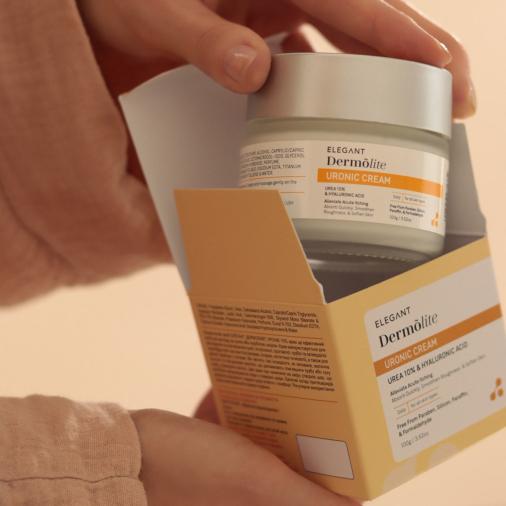
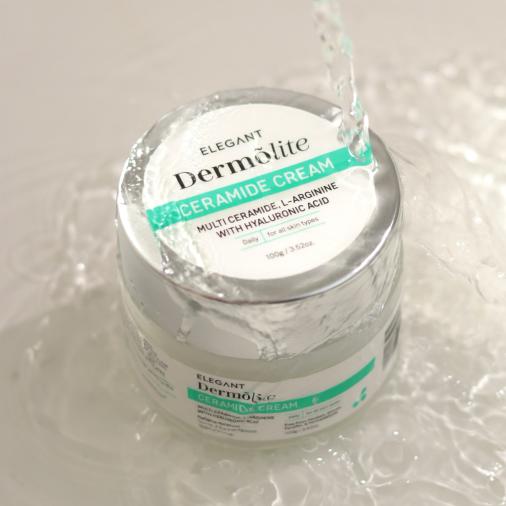
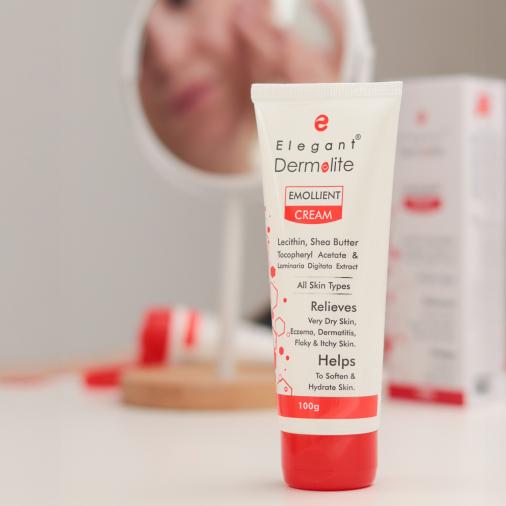
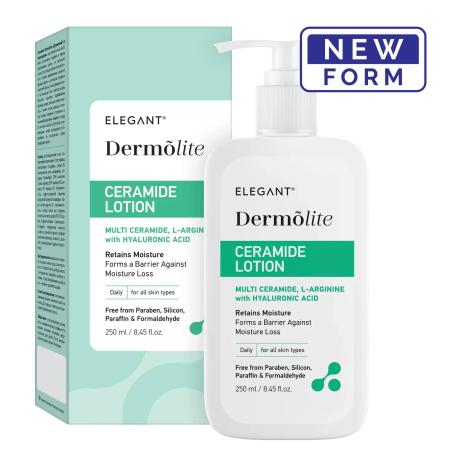
Viewed Products
Reviews
Крем Dermolite Кераміди підійшов для моєї сухої шкірі. Крем добре живить шкіру та робить її більш пружною. Після використання зникає відчуття сухості, шкіра виглядає зволоженою. Крем комфортний у використанні, добре підходить для щоденного догляду. Використовую у вечірньому догляді і ранком під макіяж.

Лосьйон Dermolite Ceramide добре зволожив мою шкіру та прибрав відчуття сухості і стягнутості. Шкіра стала м’якшою, більш еластичною. Зникло лущення, покращилась гладкість, а загальний вигляд шкіри став більш доглянутим і рівним. Лосьйон швидко вбирається, не залишає липкості, тому зручно використовувати щодня.
Класний крем, шкіра добре зволожена, не залишає жирного блиску, дуже приємний аромат, економна упаковка надовго вистачить. Обов'язково буду замовляти ще! Дякую магазину за подарунок, доданий до замовлення!!!
Беру на постійній основі.Дуже задоволена
Шикарный крем, покупаю уже 4 баночку:) Увлажнение и питание:) кожа сияет:)
Дітям крем підійшов була дуже пересушена шкіра. Дякую
Гарний крем. Чудово зволожує шкіру. Без зайвої жирності. Купуємо регулярно
Гарний крем. Чудово зволожує шкіру. Без зайвої жирності. Дуже задоволена покупкою
Беру крем підлітку. Лікуємо акне і дуже суще шкіру. Крем просто знахідка дуже зволожує. Беремо вже в друге. Рекомендую.

Write a review
Means for eczema
eczema is an inflammatory skin condition that arises due to a disruption in the regulation of the body's immune response and instability of the barrier function. The balance between hydration and protective function is disturbed, causing even neutral irritants to provoke a reaction. Unlike dryness or sensitivity, eczema has a wave-like course with periods of exacerbation and remission. Its peculiarity is that reactions can occur even to familiar factors that previously did not cause irritation. Eczema treatments are used to support the skin barrier and reduce its reactivity.
How eczema differs from dry skin, atopy, and psoriasis
Eczema is often confused with dryness or sensitivity, but these conditions have different natures and require different approaches to care.
Dry skin is a stable deficiency of moisture and lipids, which is usually well-corrected by regular moisturizing. Atopy is a genetically determined tendency to disrupt the barrier function with a familiar, repetitive pattern of manifestations. Psoriasis is associated with excessive cell turnover and the formation of dense lesions that are not defined by ordinary external irritants.
Eczema differs in that its manifestations can change under the influence of the same factors, but without a clearly defined systematicity. This is a condition where the skin does not react according to one principle, and manifestations can occur at different times.
Therefore, eczema treatments cannot be selected based on the same principles as care for dry or sensitive skin.
How the skin condition changes with eczema: when care is needed
Conditionally, phases of exacerbation, relative calm, and unstable transition between them are distinguished, when the skin quickly changes its behavior even without obvious external changes. This dynamics determines when there is a need to use eczema treatments.
During the exacerbation period, pronounced symptoms appear: itching, localized redness, discomfort, or irritation. In the calm phase, the skin usually looks without pronounced symptoms but remains sensitive to environmental changes. Transitional states often manifest as unstable reactions, where the same area of skin changes its state over a short period.
Situations in which eczema treatments are used:
- sudden exacerbation of the skin condition;
- appearance of itching in an area without an obvious cause;
- reaction to familiar care or contact with water;
- localized redness or irritation of unclear genesis.
In most cases, cosmetologists recommend using eczema care at moments of change in condition, rather than when symptoms have transitioned to a stable phase.
Why basic care does not work for eczema
Basic care is often built around hydration and lipid restoration, but this is not enough for eczema. A cream may temporarily soften the skin, but it does not affect the skin's tendency to periodic exacerbations.
Most products work with the skin's condition, not its reaction, so they give unstable results in eczema. Aggressive or intensive formulas, usually used for deeper restoration, can exacerbate irritation and provoke new reactions.
Common misconceptions about eczema:
- it's just dryness;
- a greasier cream is needed;
- it's an allergy.
Therefore, eczema treatments cannot be selected based on the needs of basic care or standard hydration.
How eczema treatments work
Products for eczema are used to reduce skin sensitivity and support its barrier function. They help stabilize the condition and reduce the intensity of reactions to external factors.
Eczema care targets several processes simultaneously:
- Reducing irritation.
- Supporting barrier integrity.
- Reducing the frequency of exacerbations.
A cream or lotion for eczema works as a tool for constant condition control, so it is applied not as a one-time solution but systematically. When dealing with this condition, it is important to maintain regularity in care.
Cosmeceutical products for eczema are not classified as medicinal products and are used as part of a systemic care regimen that helps stabilize the skin's condition during various periods.
How to choose eczema treatments based on the skin condition
When selecting an eczema treatment, the current state of the skin is taken into account. Skin type is not a determining factor, as care is tailored to the condition of a specific problematic area. Changes in manifestations in the affected area determine the texture, composition, and concentration of components in the care. The dynamics of manifestations determine the format and composition of care.
Matching skin condition and format of eczema treatments
|
Skin condition |
How it manifests |
Main principles for selecting eczema treatments |
|
Exacerbation |
itching, redness, irritation |
minimalist formulas without fragrances, with low concentrations of actives (0.5-2%), light creams or emulsions |
|
Relative calm |
dryness, tightness, flaking |
products with lipids (5-15%), ceramides, moisturizers (glycerin 5-10%), medium-density creams |
|
Unstable condition |
reaction to water, care, temperature |
emollients with an occlusive effect, thick creams or balms without potentially irritating components |
Criteria for selecting eczema treatments: format, composition, and skin parameters
When choosing eczema treatments, the form of the product, application area, and composition are also considered:
- The form of the product - cream for eczema is suitable for daily use, lotions for large areas, balms for dry and sensitive zones.
- Application area - lighter textures without fragrances are chosen for the face, while denser formulas with a pronounced emollient effect are selected for the body.
- Age - simpler formulas with a minimal number of components are used in childhood; in adults, more complex combinations with a more active composition are acceptable.
What components may be included in eczema treatments
When selecting, it is important to assess not only the presence of an ingredient but also its concentration and purpose in care:
- formulas with ceramides (0.5-3%) are chosen to support the barrier structure of the skin;
- eczema treatments with glycerin (5-10%) help retain moisture and reduce the feeling of tightness;
- emollients (squalane, plant oils, shea butter) are used to reduce water loss and soften the skin;
- components with a soothing effect (panthenol 1-5%, allantoin in low concentrations) are added to accelerate healing.
Medium or low concentrations are more often used during periods of instability to avoid overloading the skin and provoking additional reactions.
Dermolite in the Elegant Group portfolio: an expert approach to eczema care
In eczema care, it is important not only which products are used but also on what expertise the assortment itself is based. Elegant Group operates as a distributor of professional cosmeceuticals. Therefore, the selection of brands in the portfolio is based on approaches used in professional dermatological practice.
The Dermolite brand is part of this system as a series focused on working with unstable skin conditions. It combines products with various functions - hydration, barrier support, emollient care, allowing for the adaptation of routines depending on the manifestations of eczema, rather than using one universal product.
The eczema treatments presented by Elegant Group are widely used in dermatological clinics, pharmacy chains, and professional centers, where care is tailored as a system. Additionally, in developing the assortment, the company collaborates with dermatologists from Ukraine and other countries. Our trust in the Dermolite brand is formed through the expertise of the distributor, who works with the professional segment and systemic solutions for the skin.
Focus on the composition and concentration of components, not just the name or texture of the product. The Elegant Group catalog features eczema treatments that contain ceramides, moisturizing components, and emollients, allowing for the selection of a formula according to individual skin needs.
FAQ
How often should eczema treatment be applied to avoid overloading the skin?
The frequency depends on the skin condition. During the reaction period, the product is applied several times a day (from 2 to 4) or after contact with water or when dryness appears. In a more stable phase, usually 1-2 applications are sufficient. If discomfort, a feeling of a film, or an intensified reaction occurs after application, the frequency or thickness of the product should be reduced.
Can eczema cream be used only during exacerbation?
It is often used even outside of exacerbation to maintain the barrier and reduce TEWL (transepidermal water loss). This helps make reactions less sharp in the future.
Can the same product work differently on different areas?
Yes, because different areas have varying skin thickness and sebaceous gland activity. Therefore, even one formula can affect the face and body differently.
Should care be changed if there is currently no severe itching?
Not necessarily, but usually, the density of the texture or concentration of actives is changed. This allows for maintaining the condition without overloading the skin.
Can a reaction worsen from an overly rich cream?
Yes, especially if the formula contains a high concentration of lipids or actives. In an unstable condition, this can enhance occlusion and provoke an additional reaction.


