


Combination of AHA acids and retinoids in skincare

If you have previously used retinoids and AHA acids, you probably know that retinoids work deep within the layers of the skin. In contrast, AHA acids work only on the upper layers of the dermis. Therefore, combining these two ingredients may seem like a great way to create a supercharged skincare cocktail.
But does it really work that way? Can the combination of these skincare ingredients truly work wonders for your skin—or, on the contrary, cause irritation and lead to serious skin problems? Read on to find out.
How do acids work?
Glycolic or lactic acids, found in many skincare and treatment products, belong to the family of alpha-hydroxy acids (AHA). These acids act as chemical exfoliants, dissolving the bonds that hold dead skin cells on the surface of your skin. This property of acids encourages the skin to shed these cells, leaving smooth, healthy skin underneath.
AHA acids also work as moisturizers, helping to draw moisture into the skin to keep it hydrated for longer.
How do retinoids work?
Retinoids, on the other hand, belong to the family of vitamin A derivatives. They promote skin cell turnover and help prevent the clumping of keratin debris with skin cells, which can subsequently clog pores.
Retinoids can also:
-
boost collagen production;
-
even out skin tone affected by acne;
-
quickly heal inflammatory elements;
Combination. Possible or not?
In general, the possibility of combining retinoids and AHA acids depends on your skin, the composition of the products you want to combine, and any other products you regularly use.
Sometimes such combinations can be effective against hyperpigmentation caused by acne, provided that you do not have particularly sensitive skin and the formulas or concentrations of the ingredients do not irritate your skin, your skin may tolerate these two ingredients simultaneously.
However, experts generally do not recommend using both ingredients at the same time, as this can lead to dryness and skin irritation. Instead, you might try alternating them on different days to help your skin adapt.
What about BHA?
Speaking of AHA, it’s hard to ignore beta-hydroxy acids (BHA). Their properties are similar, as they also chemically exfoliate the skin. However, water-soluble AHAs primarily act on the surface of your skin, while BHAs, on the other hand, can penetrate deeper into the pores. Salicylic acid is one of the BHA acids, which is suitable for oily skin types. BHAs are known to cleanse pores, reduce breakouts, and have anti-inflammatory and soothing properties.
Is it possible to use AHA, BHA, and retinoids in one regimen?
Again, it all depends on your skin and the formulas you are already using, as well as those you want to add.
Combining AHA and BHA acids can yield impressive results.
Note!
AHA and BHA acids are exfoliants. Exfoliants are products aimed at deeply cleansing the skin of dead cells. Therefore, it is better to avoid applying them directly on top of each other and use them at different times of the day, on different days, or even on different parts of the face if necessary.
A good option would be to rationally combine them in specialized products. For example, in the cleansing foam Glycolite Max. The product contains:
-
Salicylic acid - 2%
-
Glycolic acid - 6%
-
D-panthenol, vitamin E
Introduce any new product into your routine gradually. Start with one product and use it only once or twice a week. If your skin responds well, with no discomfort or other unpleasant symptoms, you can continue to use the product going forward.
Avoid using both ingredients at the same time, as this can lead to irritation. Instead, if your skin can handle both ingredients in one day, you might try using AHA in the morning and retinoids in the evening, or vice versa.
AHA and retinoids have many benefits for the skin.
If your doctor recommends using them simultaneously and you wish to achieve the best results for your condition, and your skin responds favorably, the combination of both components is quite possible.
Do you have any questions or doubts? The best solution would be an in-person consultation with a dermatologist. Only a specialist can professionally adjust your treatment.
Interesting articles
All articles
With the first warm days, you want to spend more time in the sun. The spring sun rays seem soft and safe, but during this period, the skin is particularly vulnerable after winter. A weakened protective barrier and dryness make it more sensitive to ultraviolet light. Therefore, sun protection in spring is just as important as in summer.

Skincare is more than just aesthetics. It's a daily ritual that reminds us of self-love, of taking time for ourselves, of comfort. That's why quality skincare is a universal gift, suitable for any occasion: a birthday, a professional holiday, an anniversary, or simply as a gesture of attention without a reason.
We have gathered beauty ideas that not only bring pleasant emotions but also deliver real results.
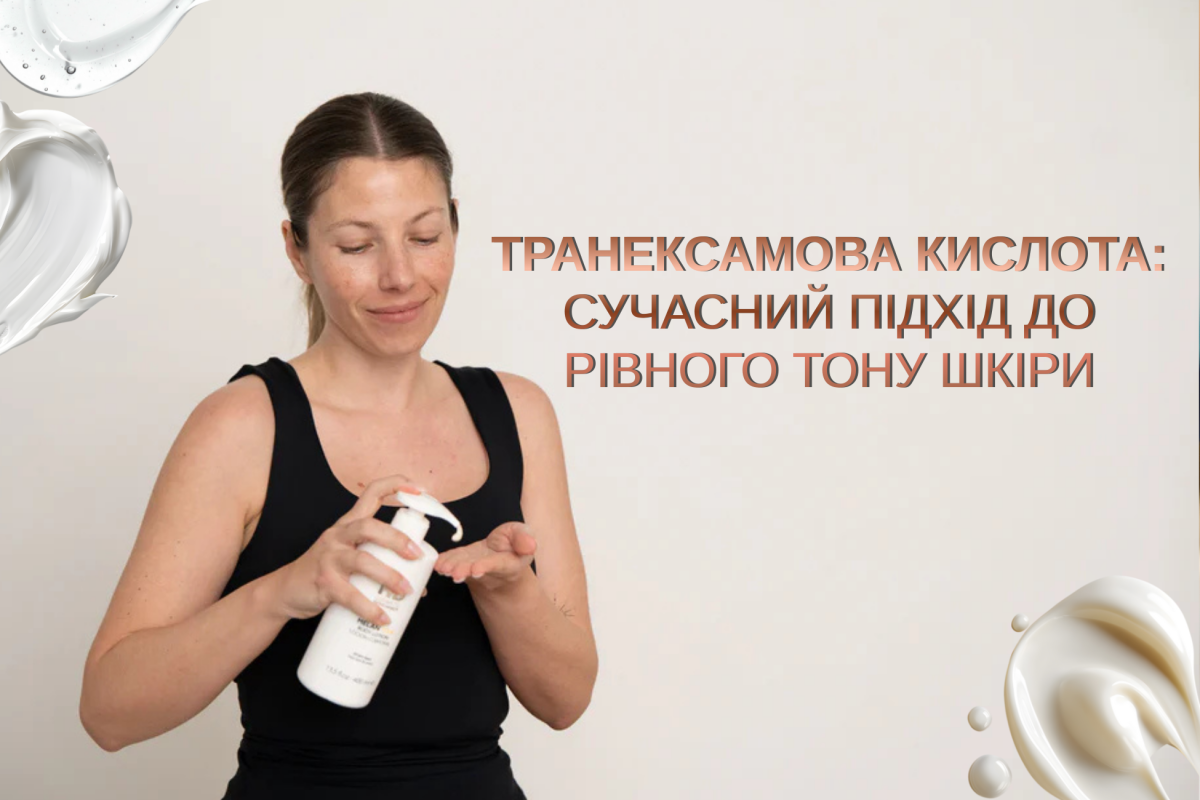
Pigment spots are an unpleasant dermatological problem influenced by various factors, such as the sun, hormonal and age-related changes affecting the production of melanin, leading to hyperpigmentation. How does this acid work in skincare dermocosmetics? Read on in the material.

PSORIASIS IS AN IMMUNOLOGICALLY MEDIATED DISEASE THAT MANIFESTS WITH SYMPTOMS ON THE SKIN AND SOMETIMES IN THE JOINTS.
Psoriasis affects 2% to 3% of the population of Ukraine.
Treatment of psoriasis at the modern stage includes a complex of systemic and topical agents, as well as physiotherapy methods, including the use of water procedures (hydrotherapy), which are prescribed to patients individually depending on the stage of the dermatosis, accompanying somatic diseases, etc.


